Nara in a Day: Deer, Todai-ji and the View from Mount Wakakusa
Nara was Japan's capital in the 8th century, and much of what it built then is still standing a short walk from the train station. The big sights sit in one long park on the east side of town, so you can see the best of the city on foot in a single day, with about 1,600 wild deer for company.
The route at a glance
- Kofuku-ji: right next to Kintetsu-Nara Station
- Nara Park: the deer, all the way along
- Todai-ji: the Great Buddha
- Mount Wakakusa: the view over the city (closed in winter)
Kintetsu-Nara Station is the closest station to the park. JR Nara Station is about 15 minutes farther on foot, or a short bus ride.
Kofuku-ji
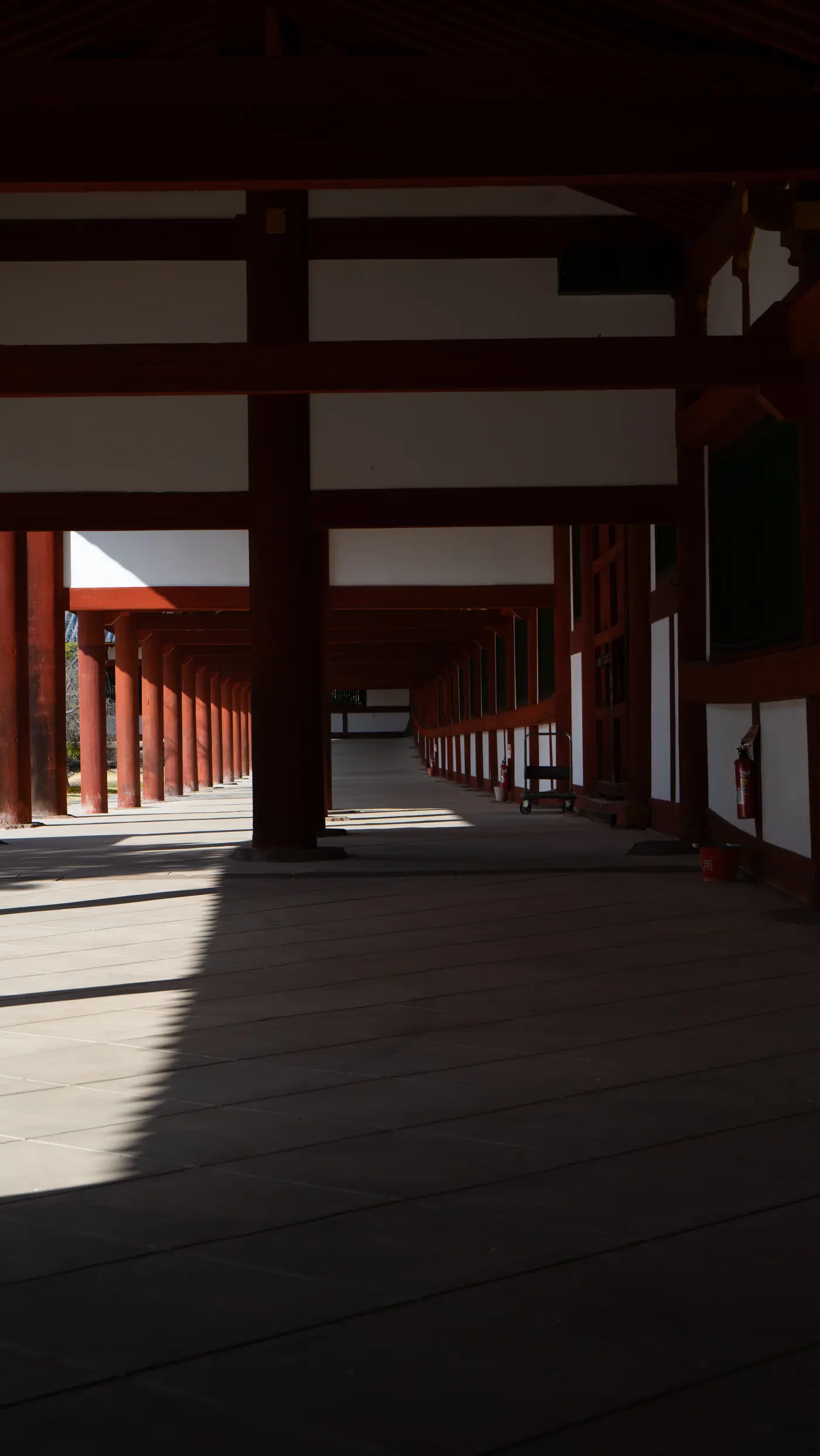
Kofuku-ji was the family temple of the powerful Fujiwara clan and once had more than a hundred buildings. The Central Golden Hall was rebuilt in 2018 in its original 8th-century style, and its red columns and gold roof ornaments stand out against the gravel courtyard.
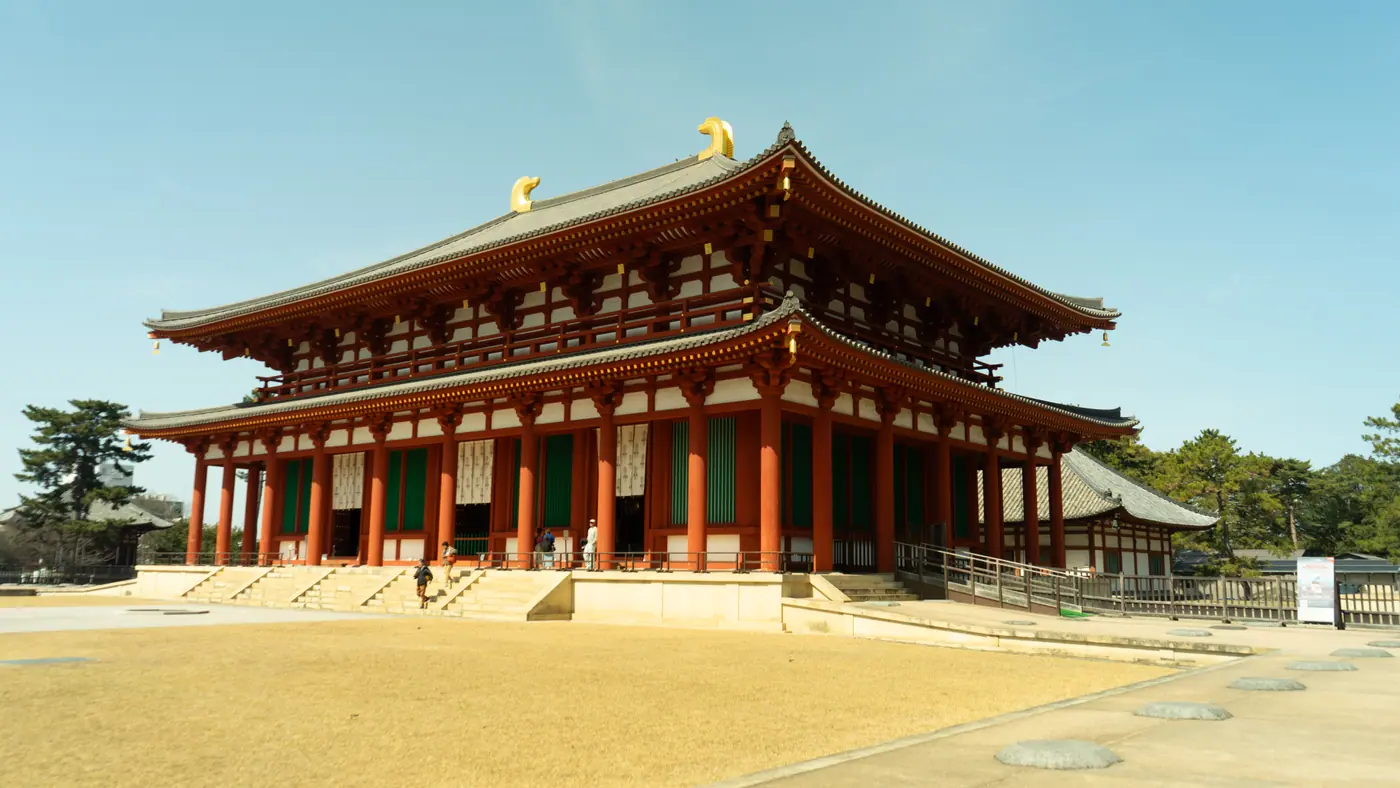
The temple's famous five-story pagoda is under a major restoration until around 2031, and it is fully covered, so don't plan your photos around it. The National Treasure Museum is still open and holds the three-faced Ashura statue, one of the best-loved Buddhist sculptures in Japan.
The deer of Nara Park
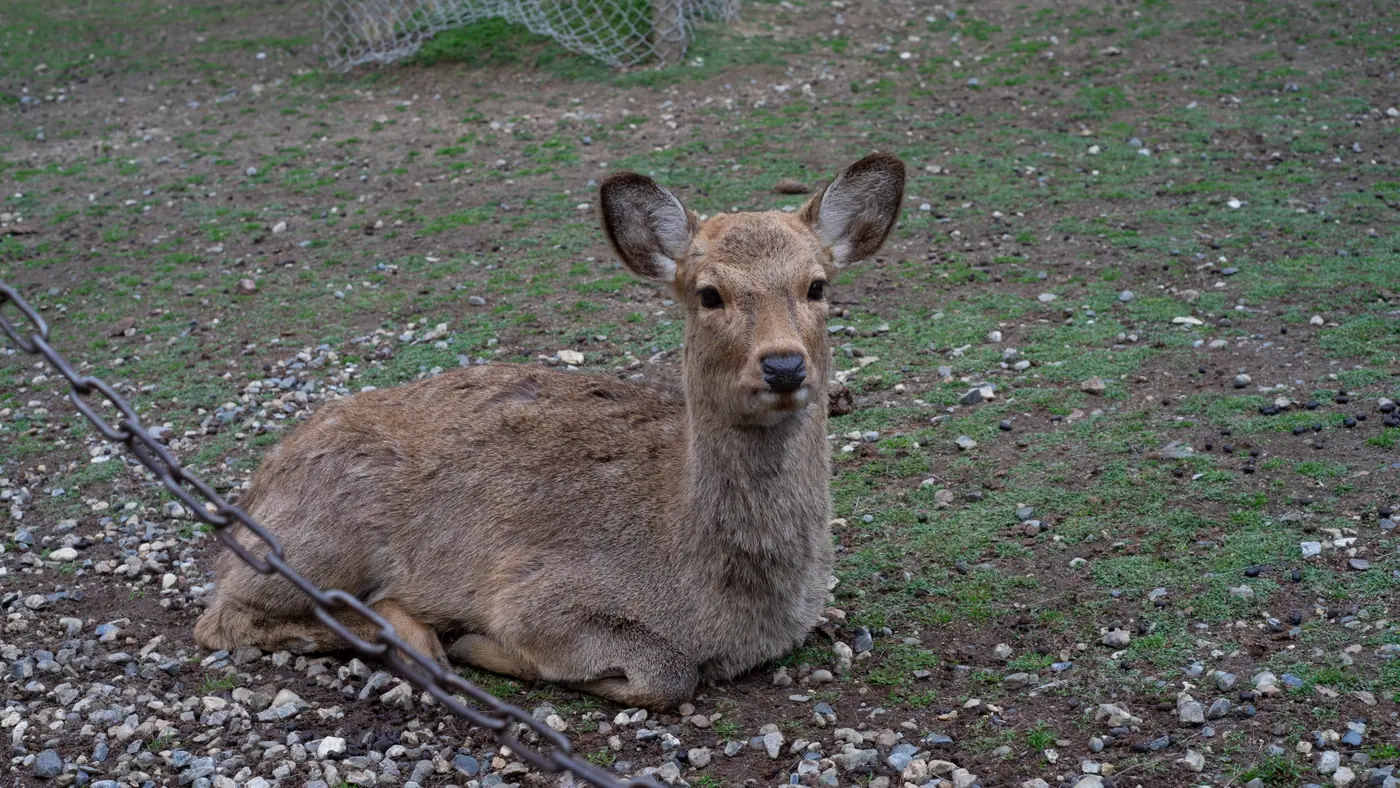
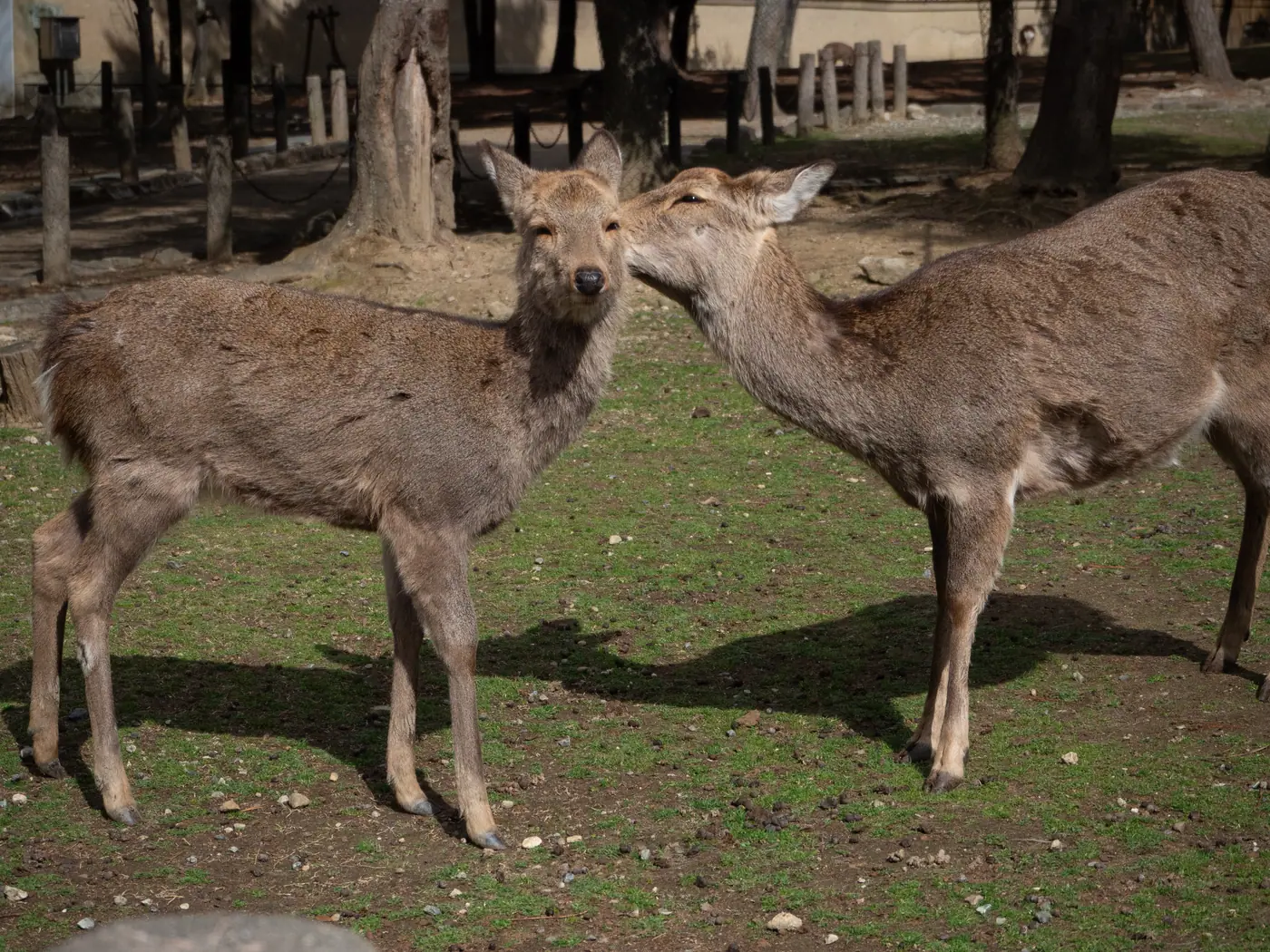
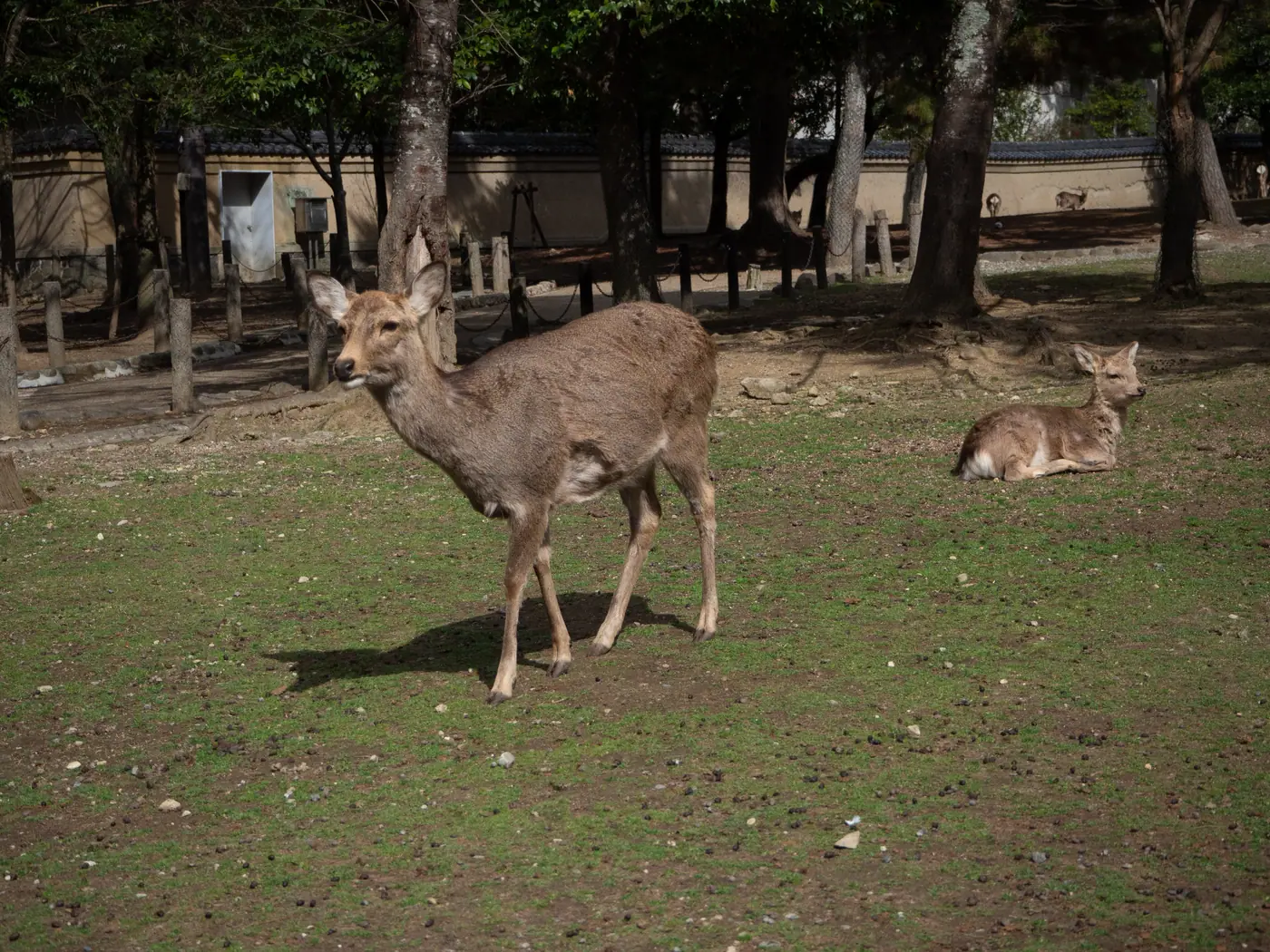
Deer have lived around Nara's temples for centuries. In local tradition they are messengers of the gods of Kasuga Taisha, and today they are protected as a Natural Monument. They wander freely through the park, the temple grounds and even the sidewalks.
Feeding the deer
- Only feed shika senbei, the special deer crackers sold at stands around the park. Bread, fruit and snacks make the deer sick.
- Hold up a cracker and some deer will bow. It is learned begging, not a trick, so don't tease them with food.
- When you are out, show your empty hands. The deer understand this surprisingly well.
- Keep paper out of reach. Deer will happily eat maps, tickets and plastic bags.
Staying safe
The deer are wild animals. They nudge, nip and chase people who have crackers. In autumn (roughly September to November), the males are in rut and can be aggressive, so keep a bit more distance and watch small children closely.
Todai-ji and the Great Buddha
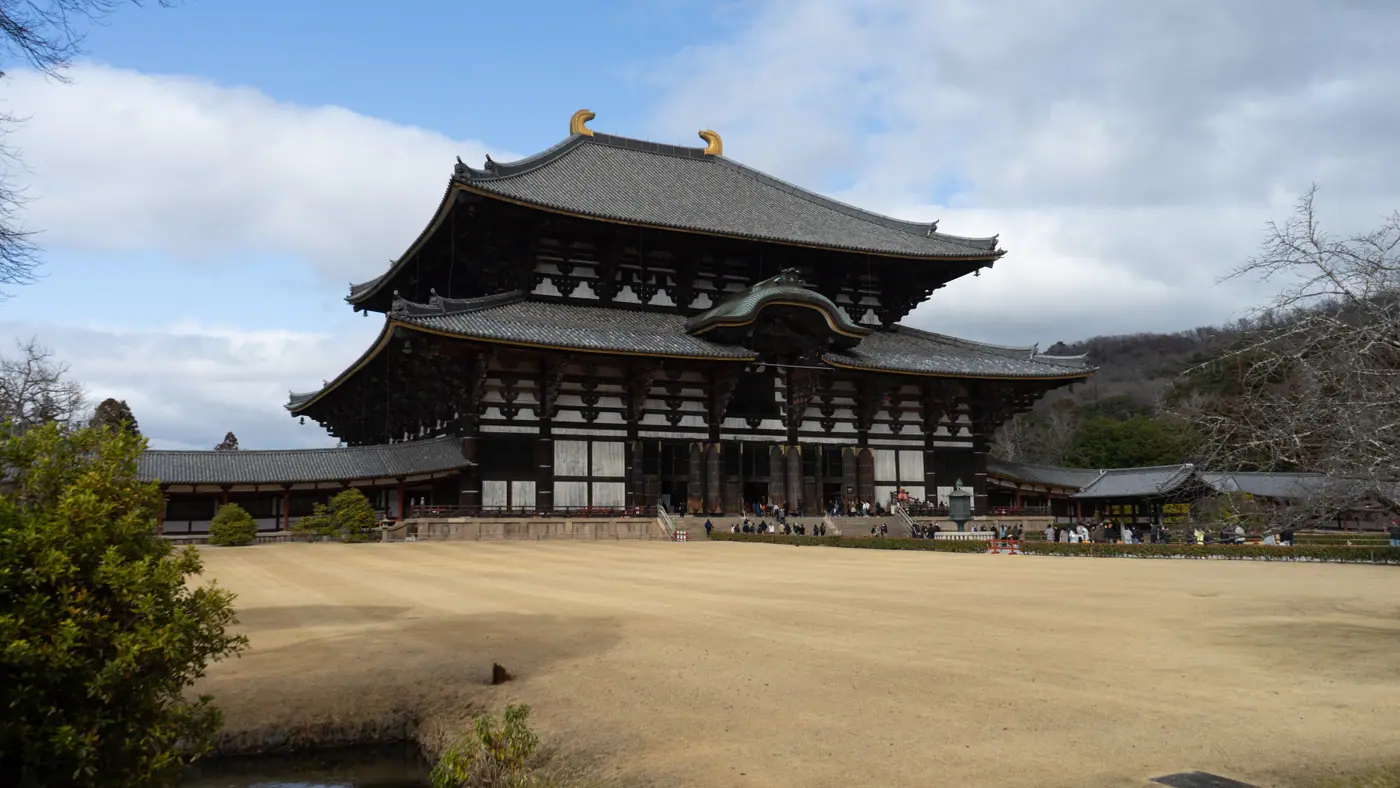
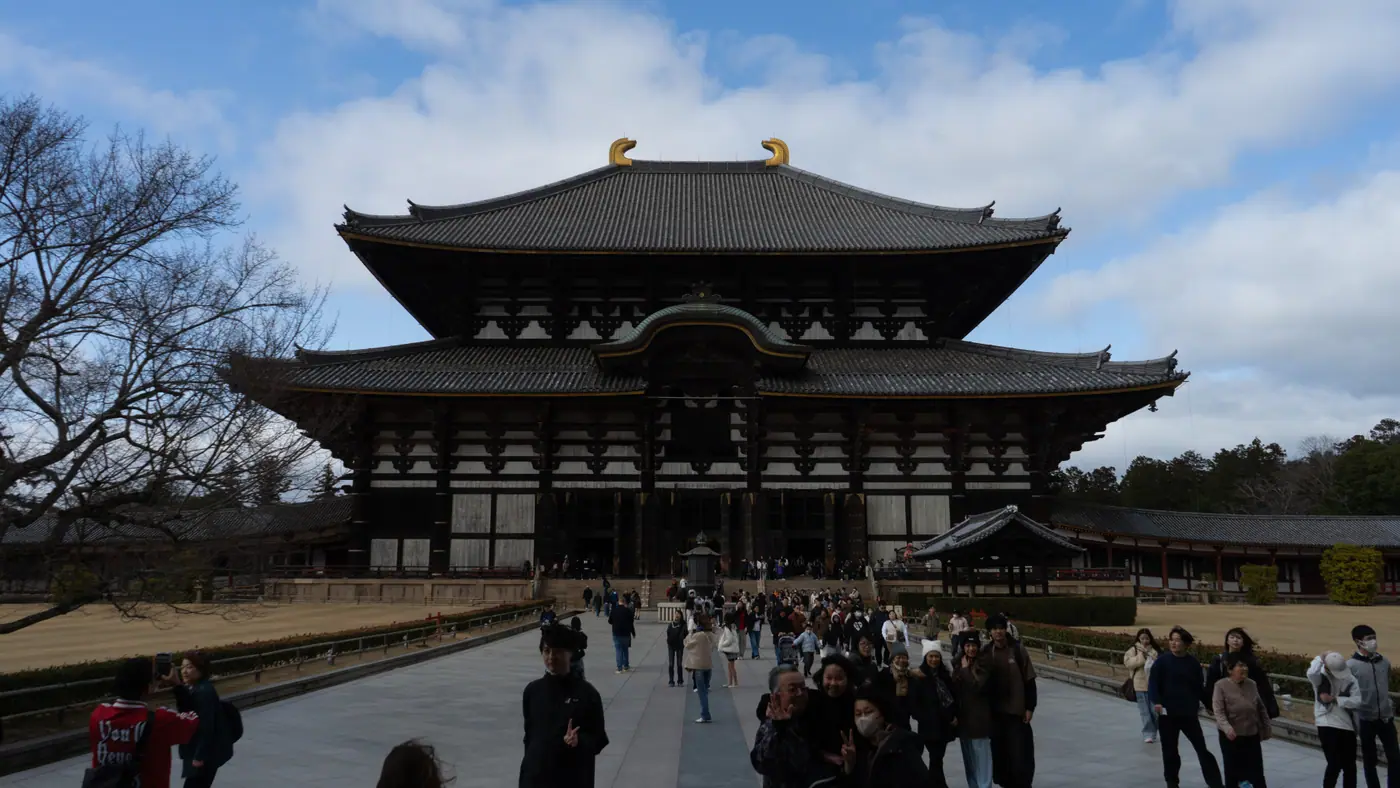
Todai-ji's Great Buddha Hall (Daibutsuden) is one of the largest wooden buildings in the world, and it was even larger before fires and rebuilding. The current hall dates from 1709 and is about two-thirds the width of the original.
Inside sits the bronze Buddha, about 15 meters tall, first completed in 752. Behind it, look for a wooden pillar with a hole in its base. The opening is said to be the size of the Buddha's nostril, and squeezing through it is said to bring enlightenment in your next life. Expect a line of kids.
On the way in, the Nandaimon gate holds two fierce wooden guardian statues more than 8 meters tall. Hours change by season and the hall closes in the late afternoon, so plan to arrive by early afternoon. For fewer people, come right at opening.
Mount Wakakusa
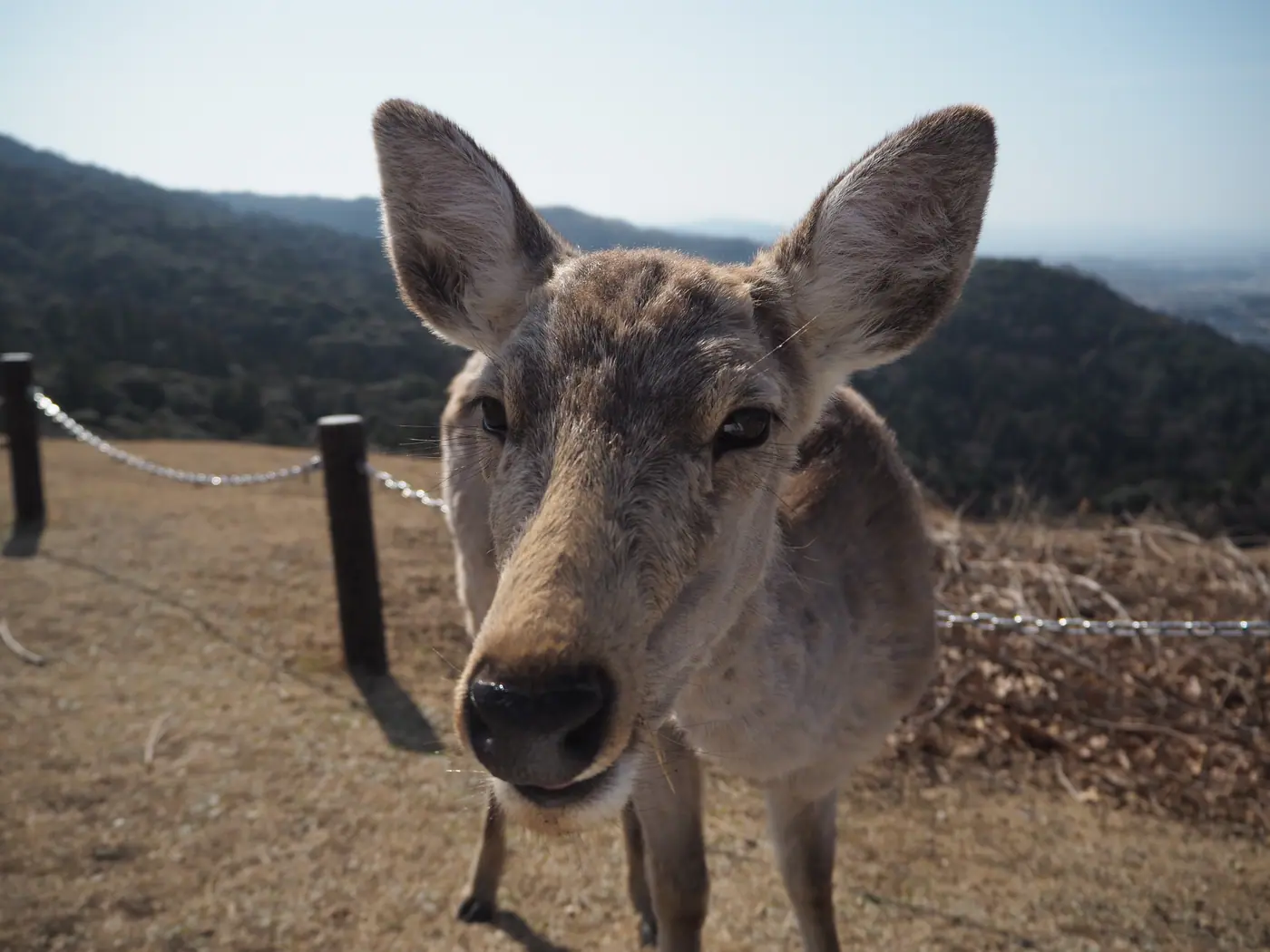
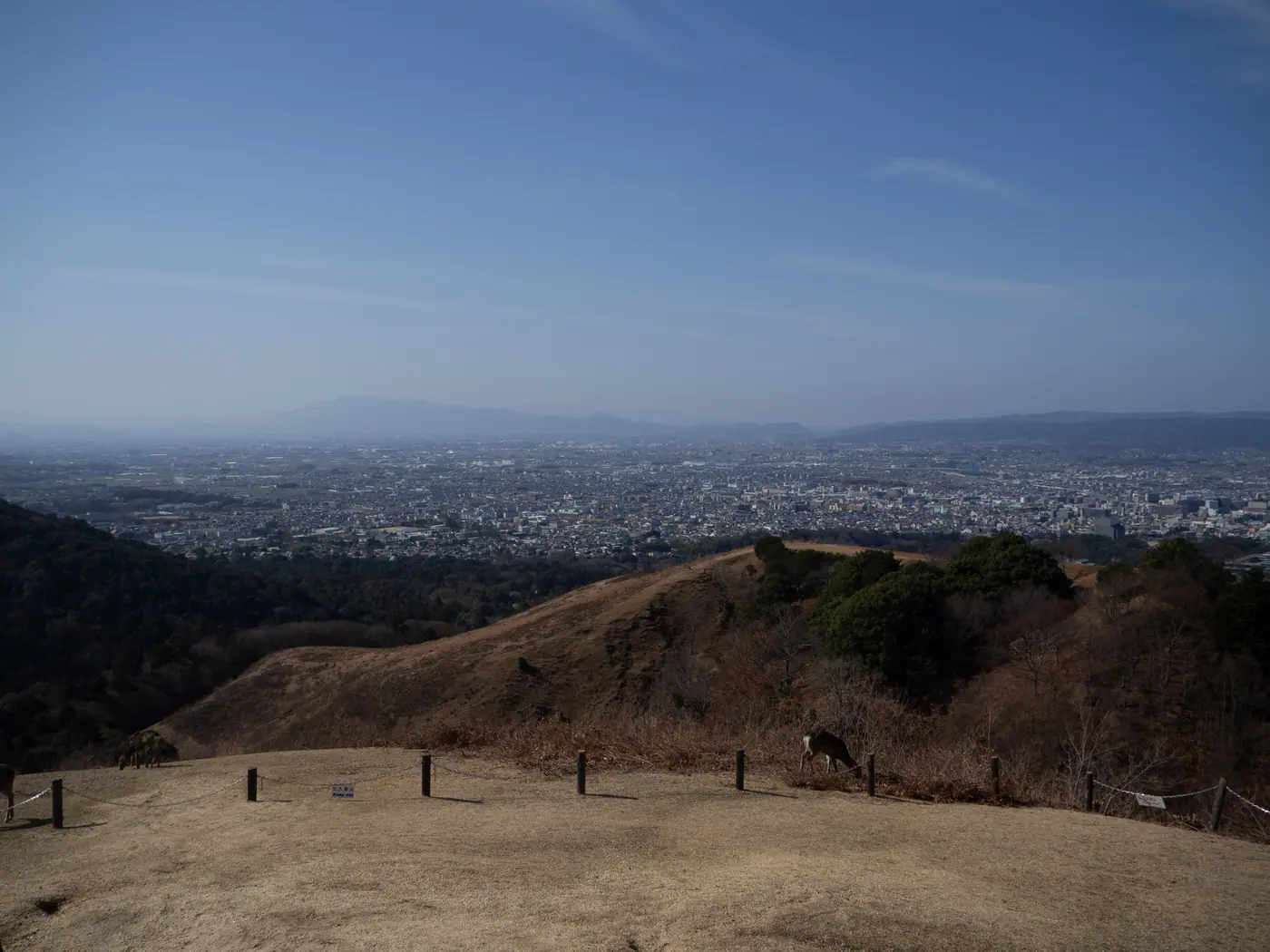
Behind the park, Mount Wakakusa (若草山) is a grassy hill you can climb in about 30 minutes. From the top, the whole Nara basin spreads out below, with the city's temples and the mountains toward Osaka. There are deer up here too.
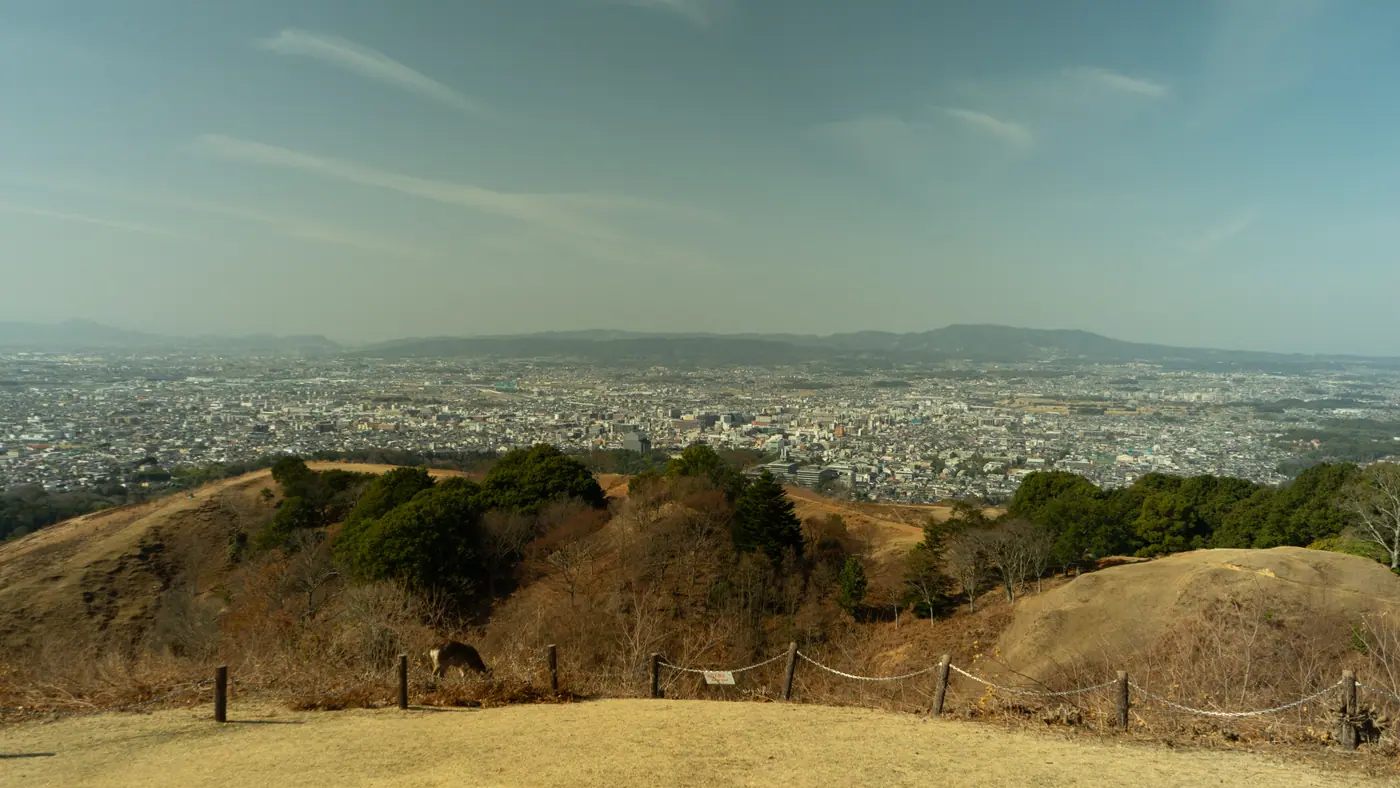
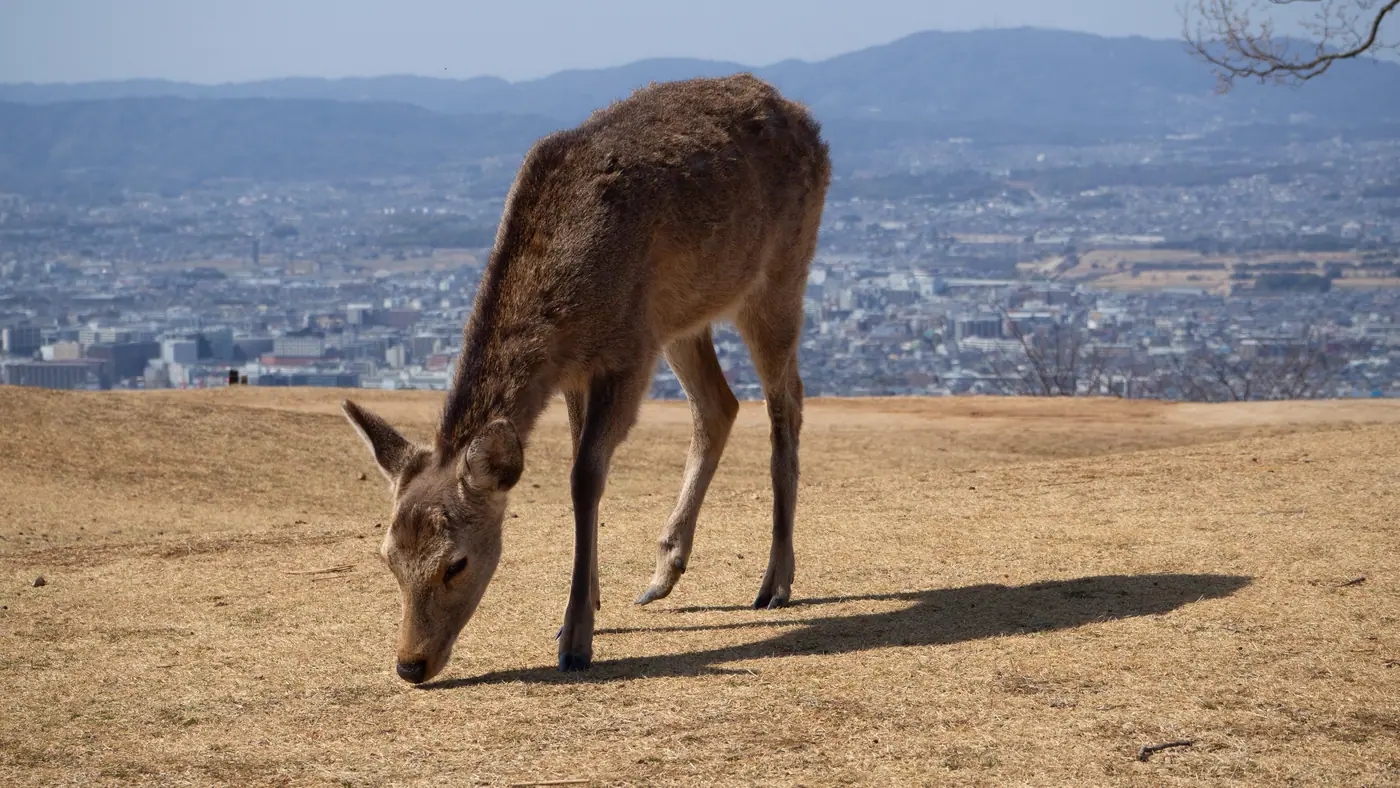
The hill is open from mid-March to mid-December and closed in winter. In late January it is set on fire for the Wakakusa Yamayaki festival, when the whole slope burns against the night sky.
If you have more time
- Kasuga Taisha: the vermilion shrine at the edge of the forest, known for its thousands of stone and bronze lanterns.
- Naramachi: the old merchant quarter south of the station, with small cafes and shops.
- Horyu-ji: home to some of the oldest wooden buildings in the world, a short train ride away.
Timing tips
- Arrive in the morning. Tour groups fill the Daibutsuden by late morning.
- Weekends in cherry blossom and autumn leaf season are the busiest.
- Staying the night lets you see the park in the evening, when the day crowds have gone.
You can find all of these places on the Nara guide and the NipponNavi map.