Dazaifu Tenmangu and the Kyushu National Museum: An Easy Half-Day Trip from Fukuoka
Dazaifu is the most popular day trip from Fukuoka, and it's an easy one. Half an hour from Tenjin by train, the small town is home to Dazaifu Tenmangu (太宰府天満宮), one of the most important shrines in Kyushu, with the striking Kyushu National Museum right behind it. Together they fill a relaxed half day.
Who the shrine honors
The shrine is dedicated to Sugawara no Michizane, a scholar and court official of the Heian period. He was sent away from Kyoto to a minor post in Dazaifu and died here in 903. The shrine stands over his grave, and over the centuries he came to be worshipped as Tenjin, the god of learning. Students from all over Japan come to pray before entrance exams, and the shrine is especially busy in January and February.
The approach
The walk from Dazaifu Station to the shrine follows a lively street of shops and food stalls. The local specialty is umegae mochi, a grilled rice cake filled with sweet red bean paste and stamped with a plum blossom. Buy one hot from any of the stalls. The street also has a Starbucks designed by the architect Kengo Kuma, with an interior made of a lattice of thousands of wooden sticks.
Shinji Pond and the three bridges
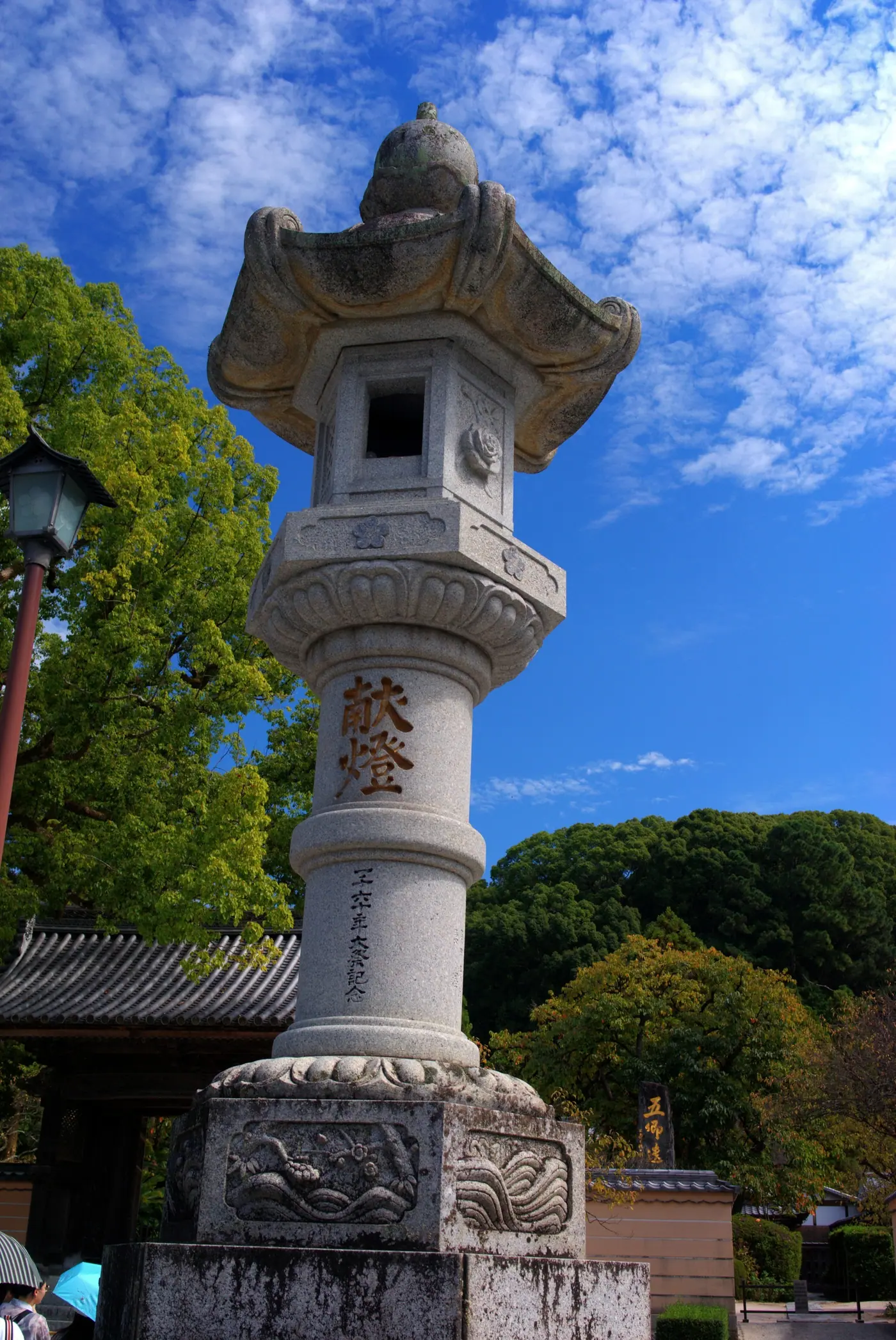
Inside the grounds, the path crosses Shinji Pond on three bridges: an arched bridge, a flat bridge, and another arched bridge. They are said to stand for the past, the present, and the future. Stop at the top of the first arch for a view over the garden island in the middle of the pond.
The Romon gate and the main hall
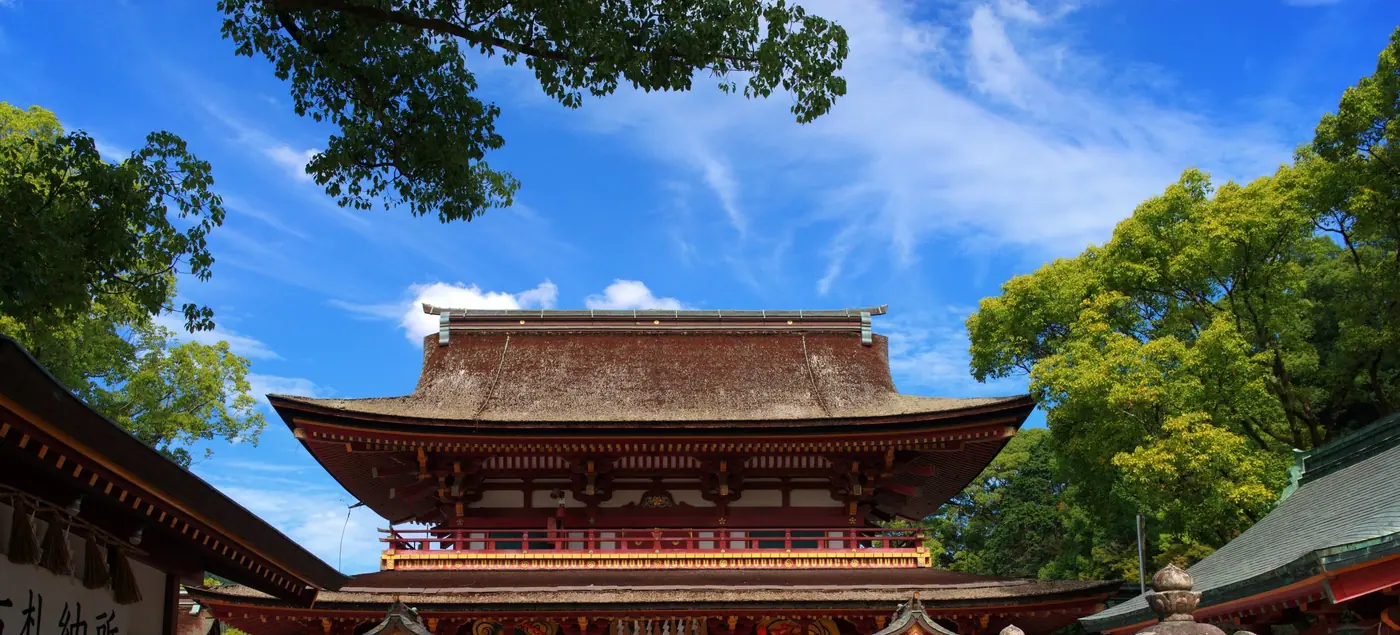
Past the bridges, the two-story vermilion Romon gate leads into the inner courtyard and the main hall.
The main hall has just come out of its first major restoration in 124 years. All of its lacquer was repainted, around 800 metal fittings were repaired, and the cypress-bark roof was fully replaced. During the work, from 2023 to 2026, worship took place at a temporary hall designed by the architect Sou Fujimoto, known for the small forest growing on its roof. The temporary hall has now been taken down, and in September 2026 visitors could once again pray in front of the restored main hall.
To the right of the main hall is the tobiume, the "flying plum." Legend says the tree loved Michizane so much that it flew from Kyoto to Dazaifu to be with him. About 6,000 plum trees grow on the grounds, and they bloom from late January to early March.
The oxen
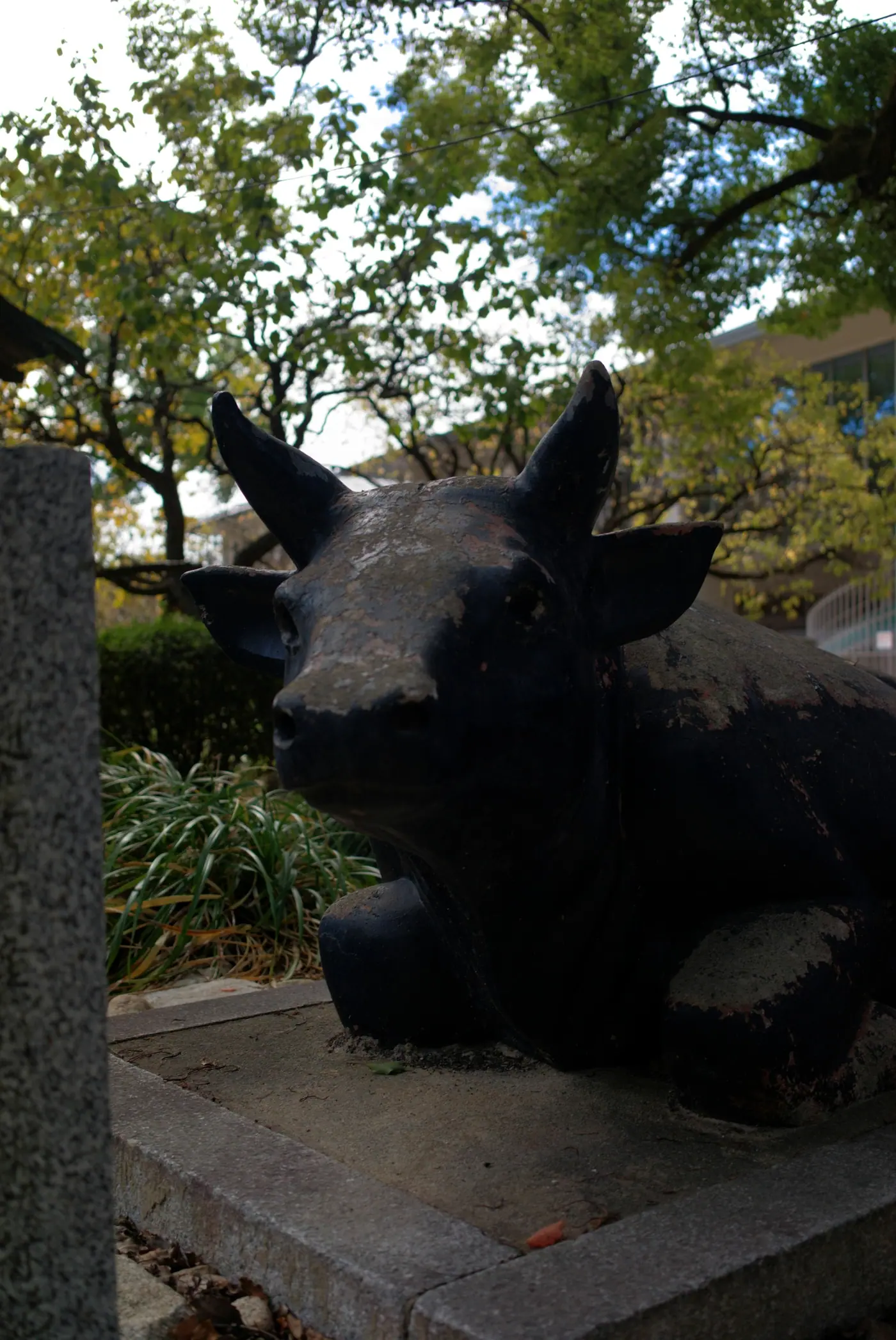
Look out for the bronze oxen around the grounds. The ox is the messenger of Tenjin, and it's said that rubbing an ox's head will make you smarter, which is why some of the heads are polished smooth.
The Kyushu National Museum
Behind the shrine, an escalator and a moving walkway run through a tunnel up the hill to the Kyushu National Museum (九州国立博物館). It opened in 2005 as Japan's fourth national museum, after Tokyo, Kyoto, and Nara. The building is a huge curved glass shell set into the forest, and it's worth seeing from outside even if you don't go in.

The permanent exhibition focuses on how Japan's culture was shaped by its contact with the rest of Asia, which fits a region that has been Japan's gateway to the continent for well over a thousand years. Special exhibitions change through the year. The museum is generally closed on Mondays, so check the schedule before you go.
Getting there
- By train from Tenjin: Take the Nishitetsu Tenjin Omuta Line to Futsukaichi, then change to the Dazaifu Line for the short ride to Dazaifu Station. The trip takes about 30 minutes. The shrine is about 5 minutes on foot from the station.
- From Hakata: Take the subway to Tenjin and change to Nishitetsu, or take the direct Dazaifu Liner Bus "Tabito" from Hakata Bus Terminal or Fukuoka Airport, which takes about 40 minutes.
Tips
- Go early. Tour buses start arriving mid-morning, and the approach gets very crowded by noon, especially on weekends.
- Plum season in February is the most beautiful time, and also the busiest.
- Pair it with the city. Back in Fukuoka, the castle ruins and Ohori Park make an easy afternoon. See our Fukuoka Castle and Ohori Park guide.
You can find Dazaifu Tenmangu, the Kyushu National Museum, and nearby food stops on the Fukuoka guide and the NipponNavi map.