Ginkaku-ji and the Philosopher's Path: A Half Day in Kyoto
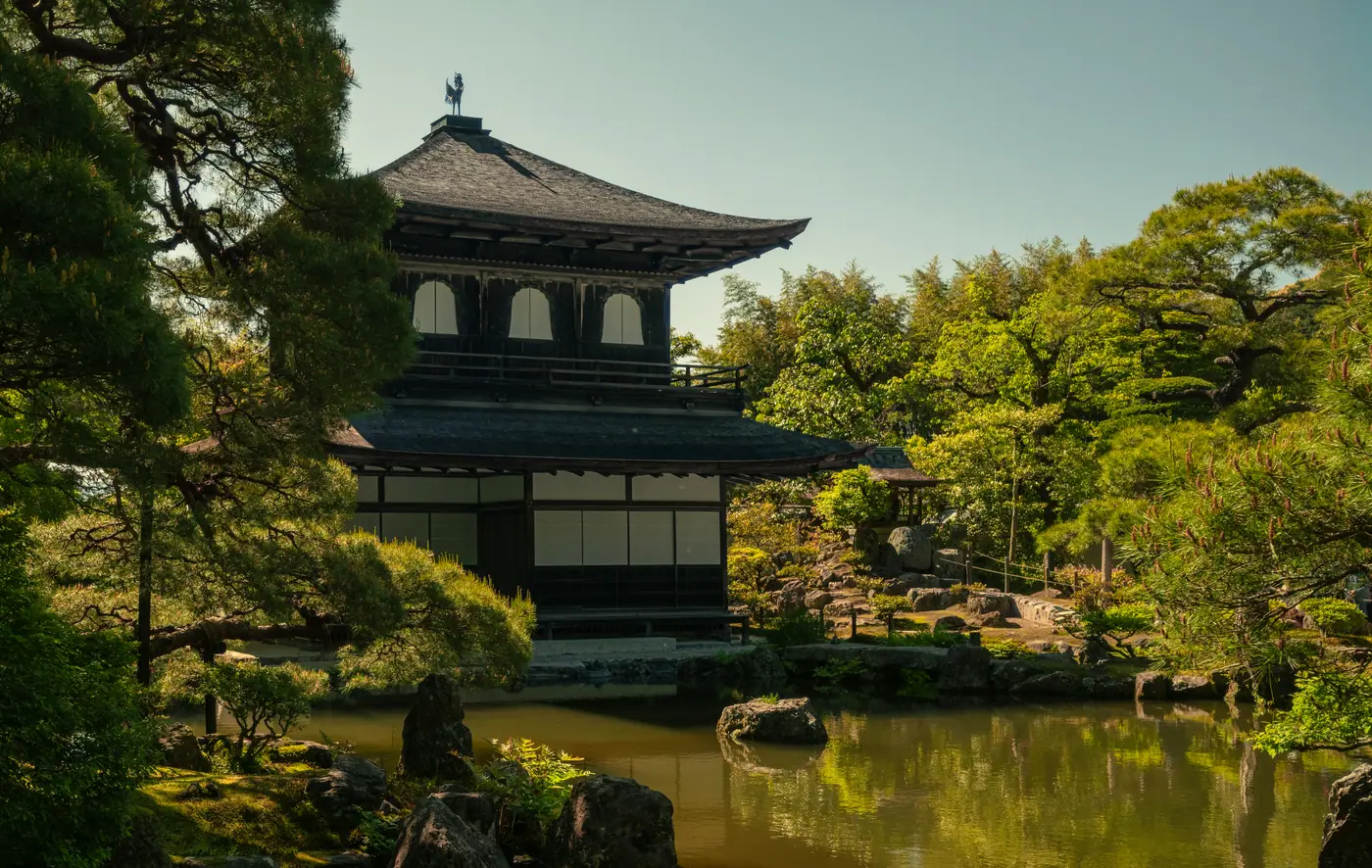
Ginkaku-ji, the Silver Pavilion, is the quieter counterpart to Kyoto's Golden Pavilion. It isn't silver, and it never was, but its garden is one of the most carefully shaped in the city, and it sits at the top of the Philosopher's Path, a canal-side walk that links it to Nanzen-ji. Put the two together and you have one of the best half days in Kyoto, especially in late autumn.
A shogun's retirement villa
Ginkaku-ji was built by the shogun Ashikaga Yoshimasa, starting in 1482, as a mountain villa for his retirement. It was loosely modeled on Kinkaku-ji, the Golden Pavilion, which his grandfather built. After Yoshimasa died in 1490, the villa became a Zen temple, officially named Jisho-ji.
Yoshimasa was a poor ruler but a huge patron of the arts. Tea ceremony, flower arrangement, ink painting and Noh theater all flourished around him, and the taste of this period, called Higashiyama culture, still shapes what people think of as "Japanese style" today.
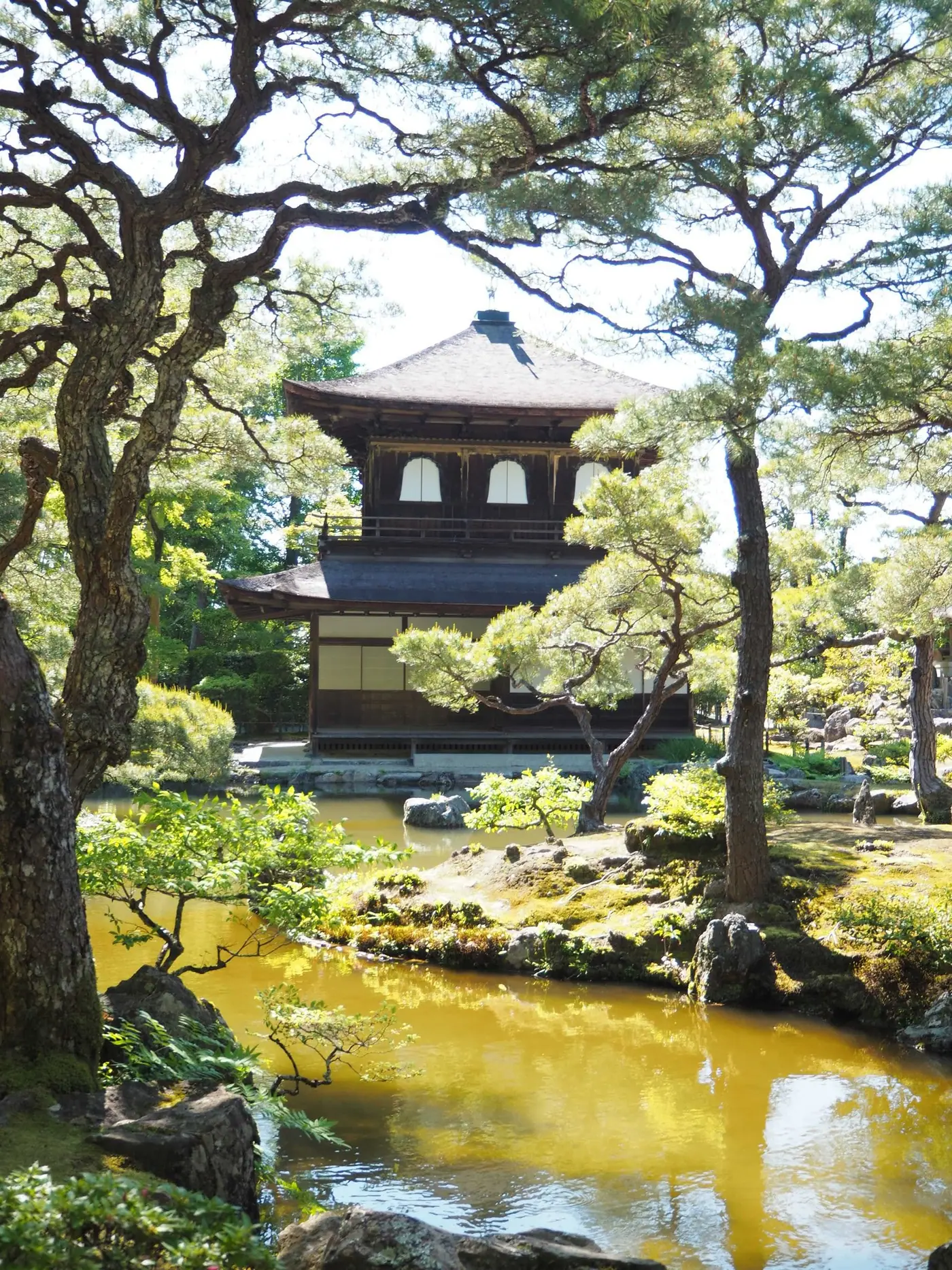
The two-story Kannon Hall is the building everyone calls the Silver Pavilion. Whether Yoshimasa ever meant to cover it in silver is still debated, but it was never done. Its dark wood is part of the appeal: it looks like it grew out of the garden.
The sand garden
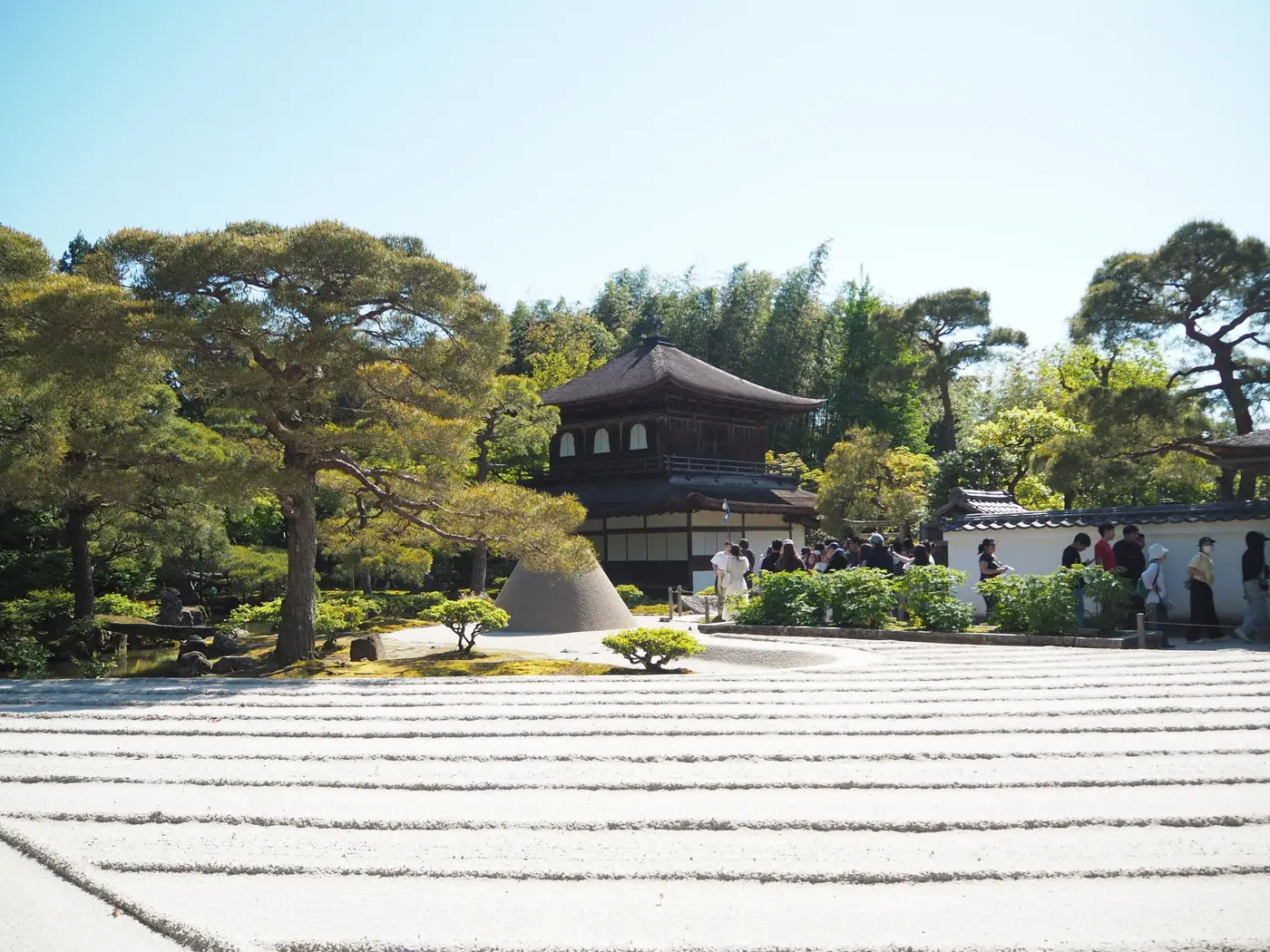
Right after the entrance hedge, you come to two shapes made of white sand:
- Ginshadan (銀沙灘), a flat "sea of silver sand" raked into lines
- Kogetsudai (向月台), a flat-topped cone about 1.8 meters tall
They're reshaped by hand. The usual explanation is that they catch and reflect moonlight, and the cone is often compared to Mount Fuji. Whatever the intention, they're strange and striking, and they look different at every time of day.
The hillside path
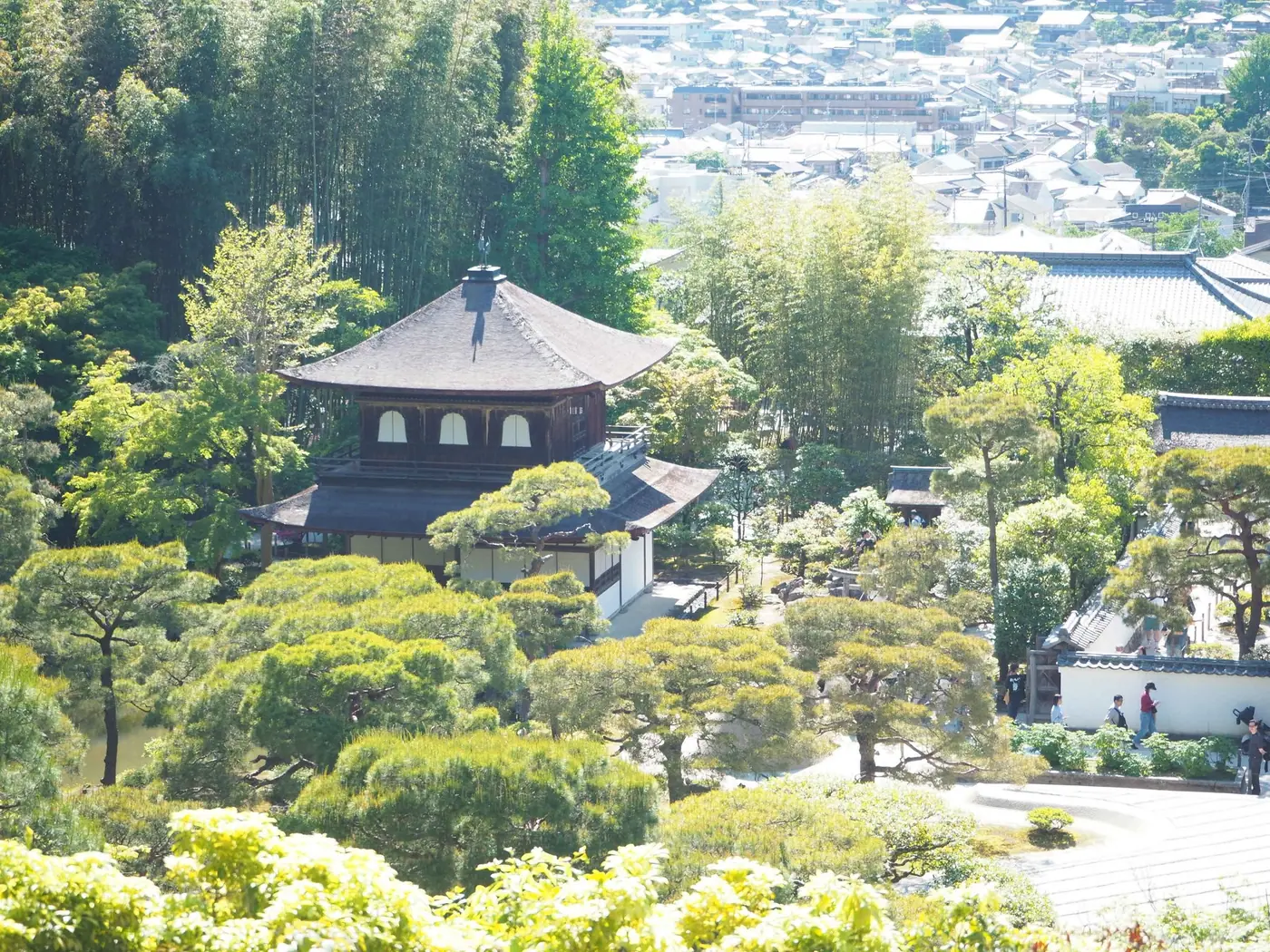
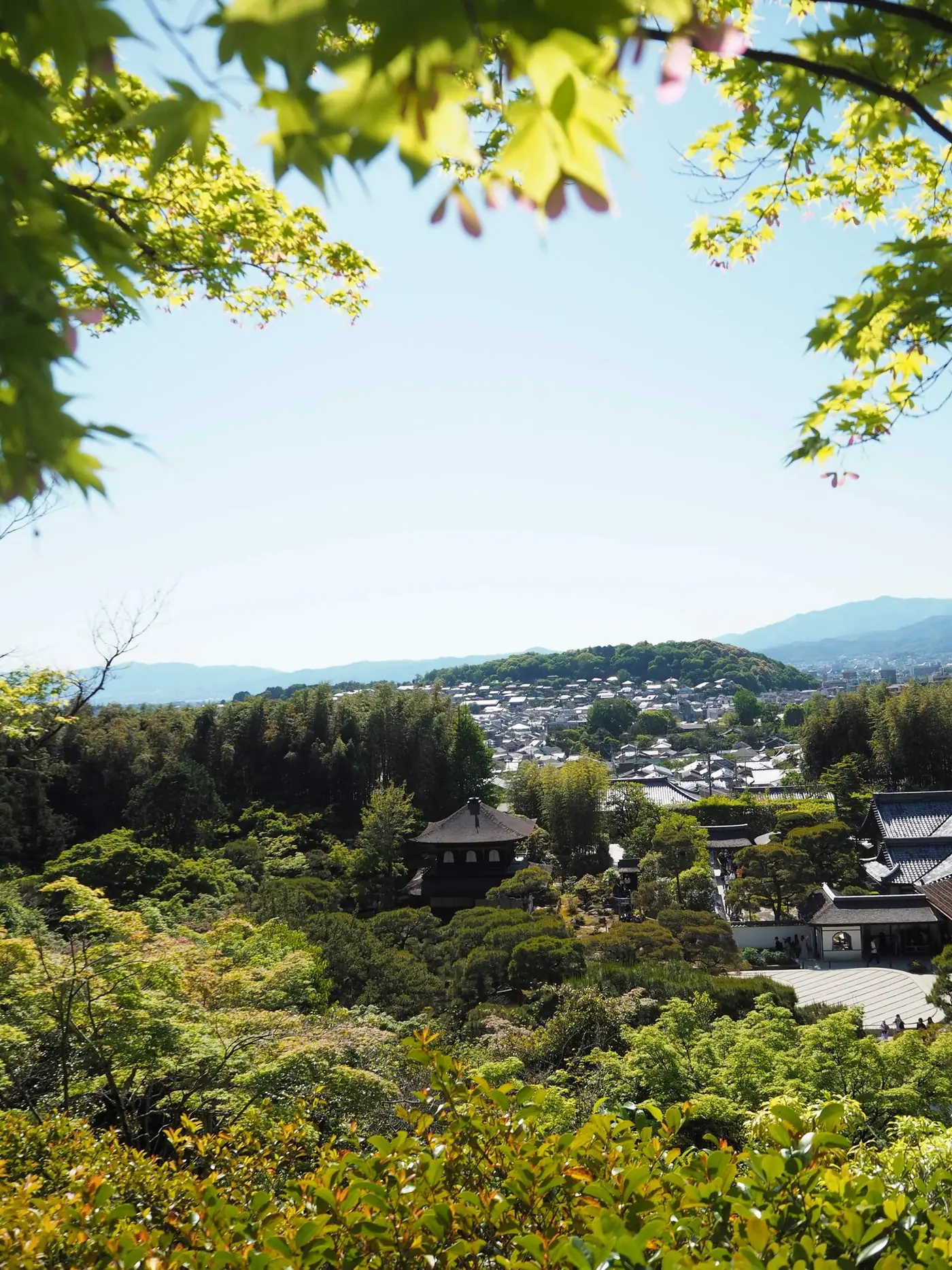
Most people take their photos at the pond and leave, but don't skip the path that climbs behind the garden. It winds up through moss and bamboo to a viewpoint where you look down on the pavilion with the rooftops of Kyoto behind it. It takes 10 to 15 minutes up, and the whole loop is about 45 minutes at an easy pace. The path has steps and isn't wheelchair accessible.
Visiting Ginkaku-ji
- Hours: 8:30 to 17:00 (March to November), 9:00 to 16:30 (December to February)
- Admission: ¥1,000 for adults, ¥500 for elementary and junior high students, from April 2026. Pay at the gate; there's no advance booking.
- Time needed: about an hour
The approach from the bus stop is a short uphill street of souvenir and sweet shops. It gets very busy from late morning, so try to arrive right at opening.
The Philosopher's Path
The Philosopher's Path (哲学の道) follows a narrow canal for about 2 km between Ginkaku-ji and the area around Nanzen-ji. It's named after the philosopher Nishida Kitaro, who used to walk it on his way to Kyoto University.
Starting at Ginkaku-ji and walking south is the easiest way to do it: you finish near Nanzen-ji, with buses and the subway close by. Along the way:
- Honen-in, a small moss-covered temple just off the path with a thatched gate, free to enter the grounds
- Small cafes and craft shops, mostly on the canal's east side
- Eikan-do, near the south end, one of the most famous autumn leaf temples in Kyoto (separate admission, and very busy in November)
- Nanzen-ji, with its huge Sanmon gate and the brick aqueduct behind the temple
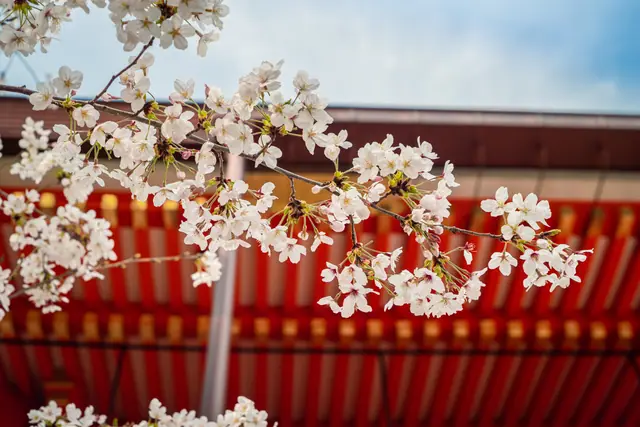
The path is lined with cherry trees, so it's at its most crowded in early April. In autumn, the maples along the canal and at Eikan-do usually peak from mid to late November.
Kimono for the walk
Walking the Philosopher's Path or the lanes of Higashiyama in a rented kimono is popular, and it suits this part of the city. Most rental shops are in Gion and around Yasaka Shrine and Kiyomizu-dera, a short bus or taxi ride south, so it's easiest to pick one up in the morning there and start your walk from Nanzen-ji instead.
Getting there
From Kyoto Station, take Kyoto City Bus 5 or 17 to Ginkakuji-michi, about 30 to 40 minutes depending on traffic, then walk about 10 minutes. In autumn the buses get crowded and slow. An alternative is the Tozai subway line to Keage Station, a few minutes' walk from Nanzen-ji: do the walk in reverse, finishing at Ginkaku-ji.
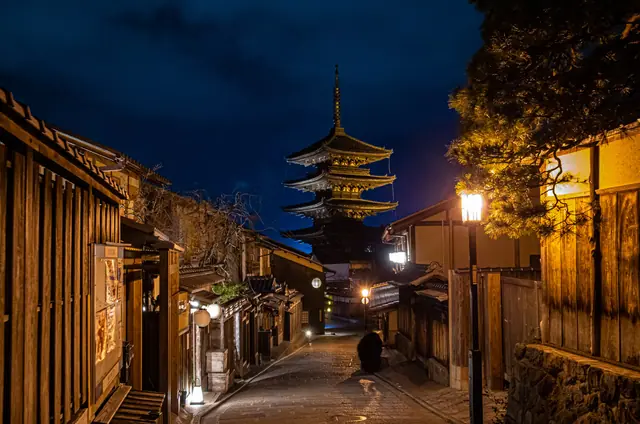
From here it's easy to continue into Higashiyama: our walk through Yasaka Shrine, Maruyama Park and the Yasaka Pagoda starts about 20 minutes south of Nanzen-ji.
You can find Ginkaku-ji and the rest of the city on the Kyoto guide and the NipponNavi map.