Eihoji Temple in Tajimi: A Zen Garden Worth the Detour
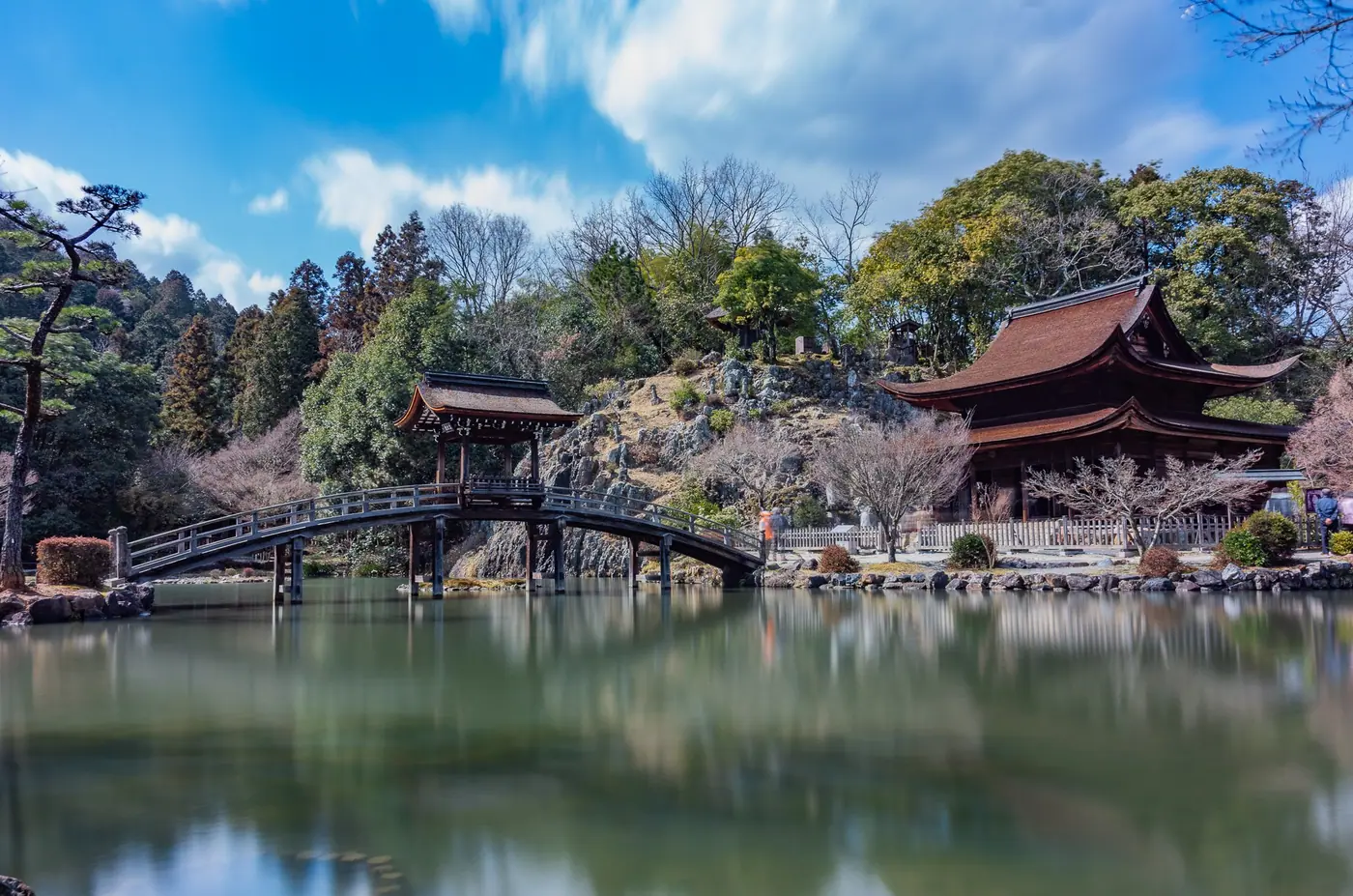
Most people pass through Tajimi on the train between Nagoya and the Kiso Valley without getting off. That's a shame, because a short bus ride from the station sits one of the most beautiful temple gardens in central Japan, with two National Treasure buildings, a curved bridge over a still pond, and almost none of the crowds you'd find at a garden like this in Kyoto. Entry is free.
What Eihoji is
Kokeizan Eihoji (虎渓山永保寺) is a Rinzai Zen temple founded in 1313 by Muso Soseki, the monk who later designed some of Kyoto's most famous gardens. The name "Kokei" comes from Tiger Ravine on Mount Lu in China, a landscape the founder thought this valley resembled.
The temple has been a training place for monks for centuries, and it still feels like a working temple rather than a tourist site. Keep your voice down, stay on the paths, and don't walk into areas that are roped off.
The two National Treasures
- Kannon Hall (観音堂): the small hall across the bridge, with a gently curved roof. It's one of the best examples of early Zen-style architecture in Japan.
- Founder's Hall (開山堂): the hall dedicated to the temple's first abbot, deeper in the grounds.
Both buildings are around 700 years old. The temple's main hall and kitchen building burned in 2003 and were rebuilt with donations, the main hall being finished in 2011, so some of what you see is new. The two National Treasures survived the fire.
The garden
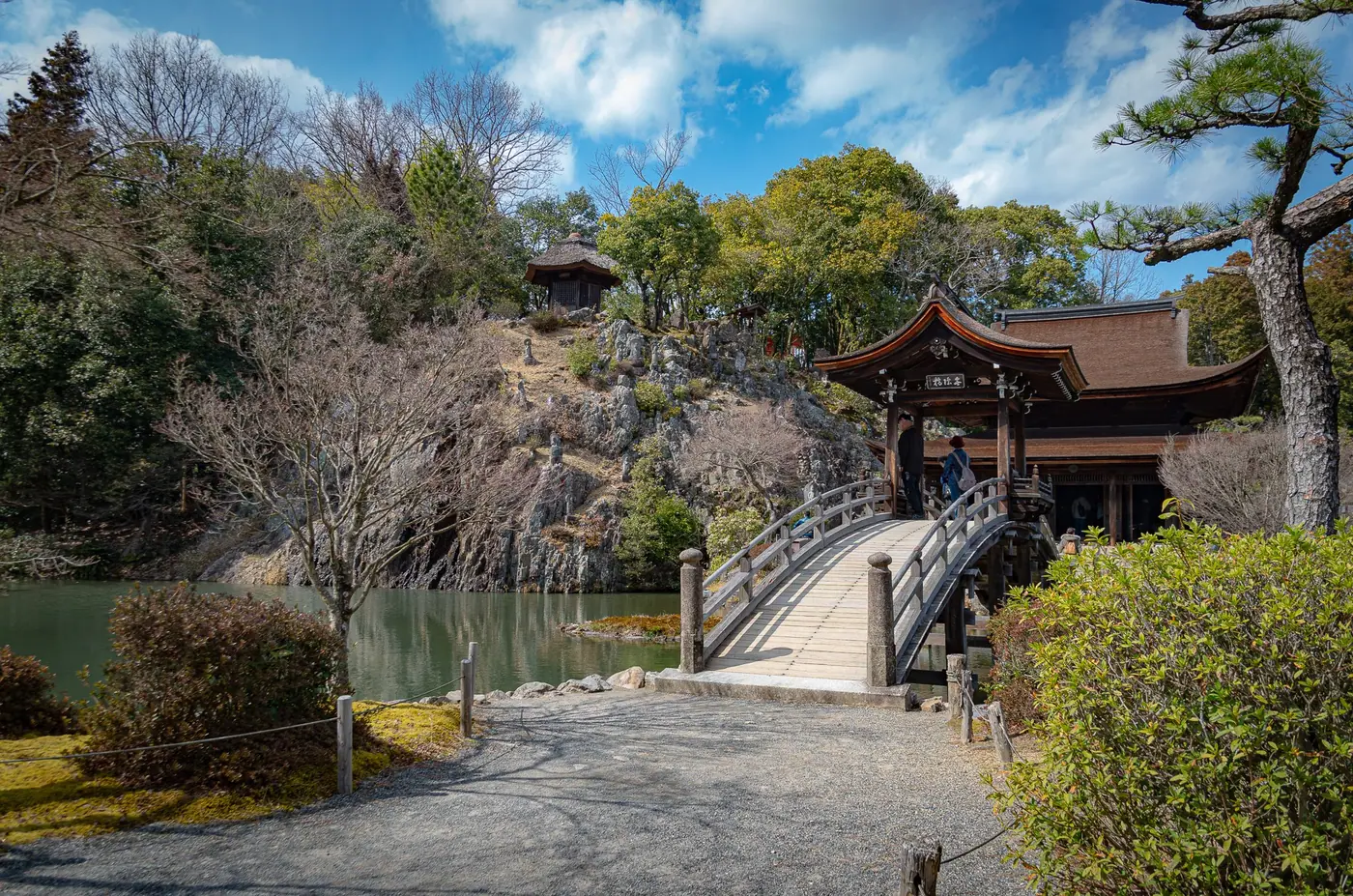
The garden is a nationally designated Place of Scenic Beauty, and it's the reason to come. The Kannon Hall sits on the far side of a pond called Garyu-ike, crossed by the arched Musai Bridge. Behind it rises a rocky cliff with a thin waterfall dropping into the pond, so the whole scene looks like a landscape painting.
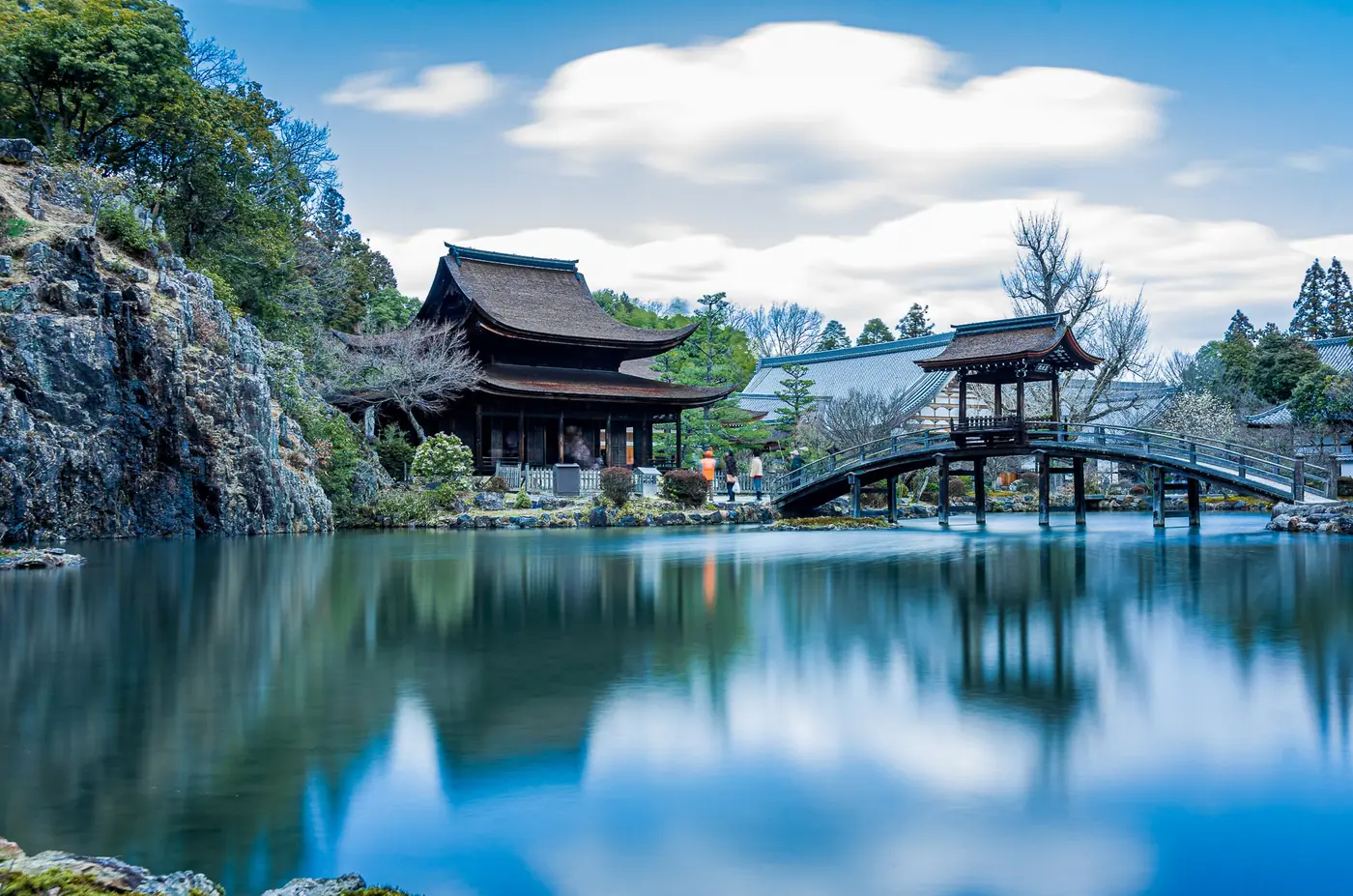
On a calm day the pond reflects the halls almost perfectly. Walk the path around the edge rather than just taking a photo from the first viewpoint; the angle changes a lot as you go.
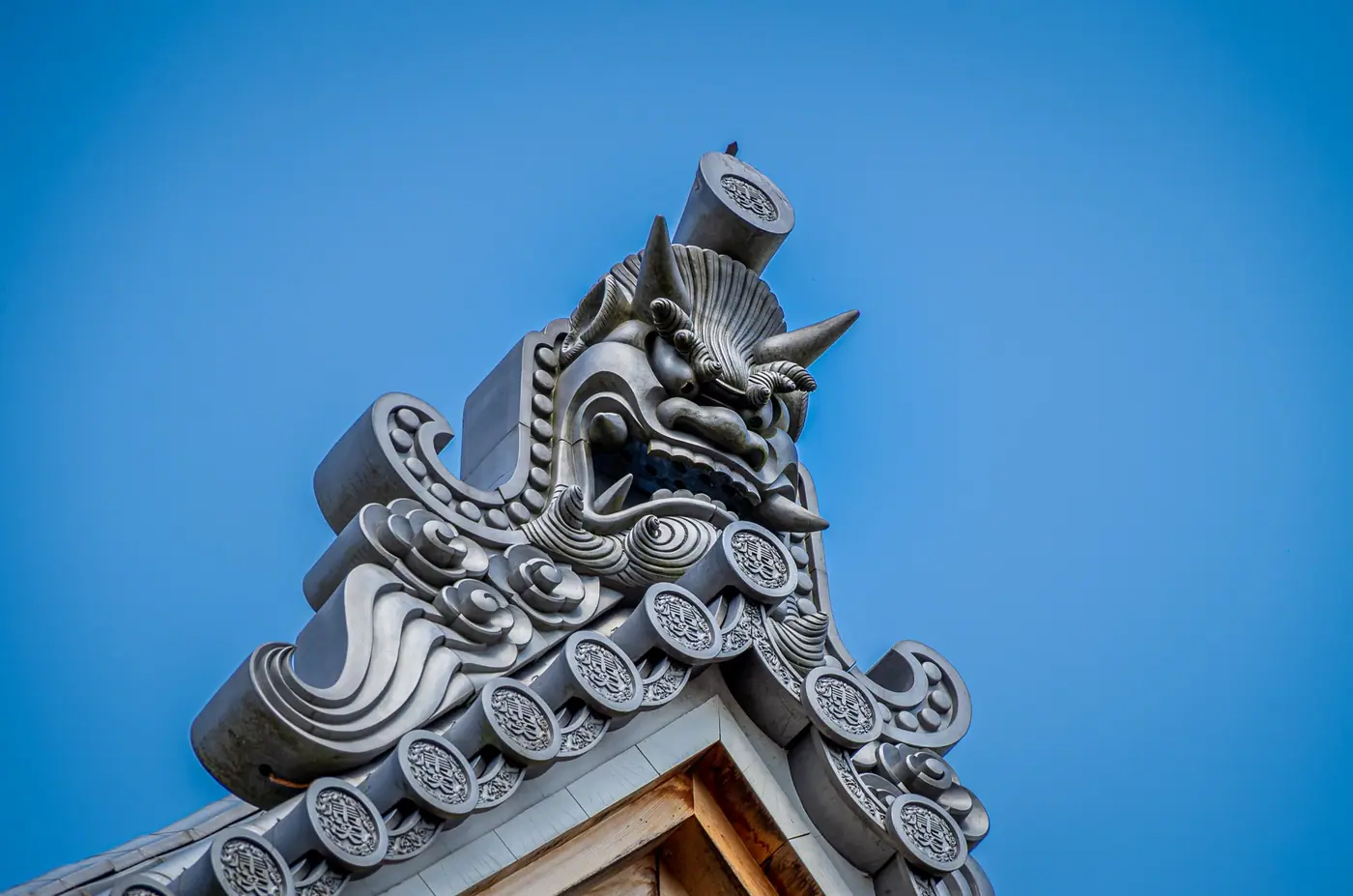
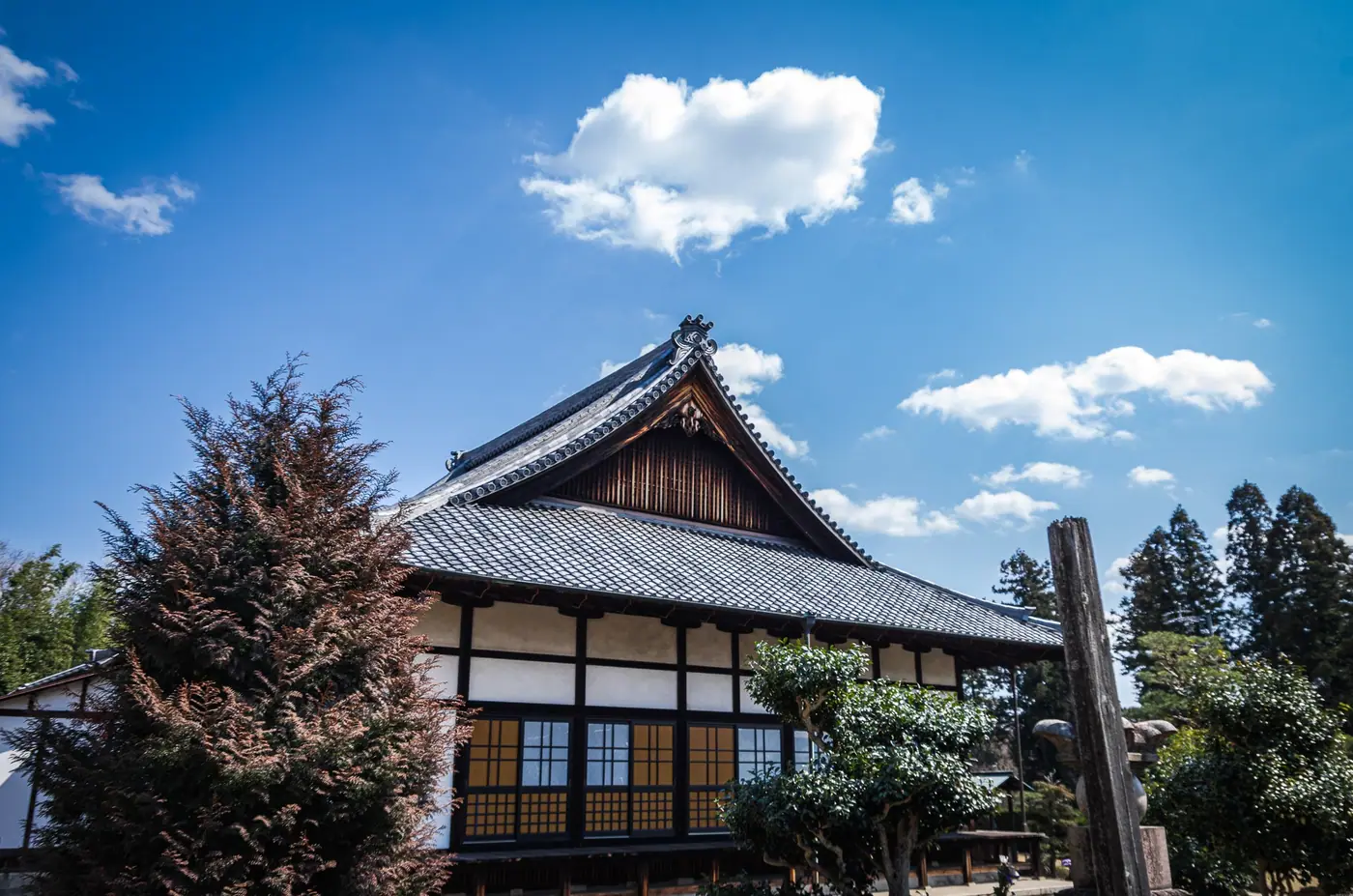
Look up at the roof ridges too. The onigawara (demon tiles) at the ends are sharply detailed and stand out well against a blue sky.
Autumn leaves and the great ginkgo
Eihoji is one of the better autumn leaf spots in the Tono area of Gifu. The maples around the pond turn red, and a huge ginkgo in front of the main hall turns bright gold. In a normal year the colors are best from early to late November, and the timing shifts by a week or so with the weather. Once the ginkgo's leaves fall, the ground in front of the hall is carpeted in yellow for a few days, which is worth seeing in its own right.
The temple has held evening illuminations in some autumn seasons, but not on a fixed schedule. Check the temple's website or call before planning an evening visit.
Visiting
- Hours: 7:00 to 17:00, every day
- Admission: free
- Time needed: 45 minutes to an hour for the grounds and garden
- Address: 1-40 Kokeizan-cho, Tajimi, Gifu
Getting there
Take the JR Chuo Line from Nagoya to Tajimi Station (roughly 30 to 40 minutes, depending on the train). From the station, take a Totetsu bus toward Onada or Kotaki and get off at Kokeizan (虎渓山), then walk about 7 minutes. Walking the whole way from the station takes about 30 minutes, partly along the Toki River. A taxi is around 10 minutes.
By car, the temple is about 2 km from the Tajimi exit of the Chuo Expressway. In peak autumn weekends, come early, because the roads near the temple are narrow.
While you're in Tajimi
Tajimi is the heart of Mino ware, one of Japan's biggest pottery traditions, and the town is full of ceramic shops and galleries. If you have another hour, the Mosaic Tile Museum in the Kasahara district is a striking building shaped like a hill of clay, and a fun stop even if tiles aren't your thing.
Combining it with the rest of Gifu
Tajimi is on the same JR Chuo Line as Ena and Nakatsugawa, so Eihoji fits well into a day along the line. Get off at Ena for the Ena Gorge and the old post town of Oi-juku, or continue to Nakatsugawa for the Nakasendo post towns.
If you're traveling on into northern Gifu for Takayama and Shirakawa-go, it's a different direction: those trips usually start from Nagoya on the Hida line or by highway bus, and a guided day tour is the easiest way to see both in one day.
You can find Eihoji and the rest of the prefecture on the Gifu guide and the NipponNavi map.